
Textiles & Garments · ERP guide
ERP software for garment and textile manufacturers: what the system has to manage
A garment factory is planned by style and judged by the ship date. This is what an ERP has to manage in a cut-and-sew unit, from the buyer's size ratio to the packed carton, and where an accounting-led system leaves gaps.
By Nexfloe · · 9 min read
- Industry:
- Textiles & Garments
- Article type:
- ERP guide
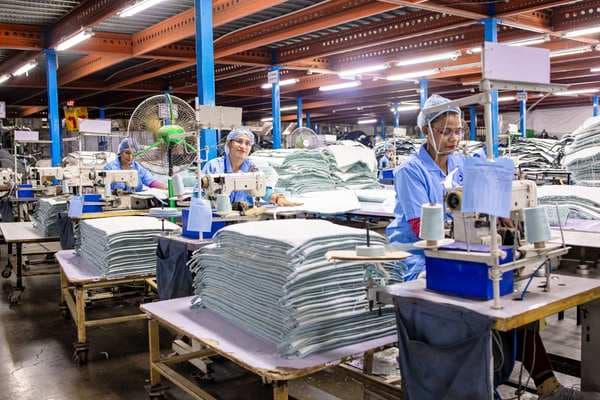
A garment factory is planned by style and judged by the ship date. The buyer's order fixes a style, a colour and size ratio, a quantity and an ex-factory date, and everything on the floor, from the fabric roll to the sealed carton, has to add up to that order. An ERP for this kind of plant is judged on whether it keeps those numbers straight while the work is spread across cutting tables, sewing lines and job workers in other towns.
This guide covers what that system has to manage in a garment or textile unit, how an order moves across the floor, and where the gaps usually are. It is written for owners, production heads, merchandisers and planners in cut-and-sew factories, whether they ship to brands directly or sew for exporters.
Quick answer
ERP software for garment and textile manufacturers connects the buyer's order to the floor. It turns a style, its size and colour ratio and the ex-factory date into work orders, issues fabric by roll and shade lot against the cut plan, follows bundles through sewing with hourly counts per line and operator, sends embroidery and washing out as job work, records checks on the line, and checks packing against the buyer's ratio.
Why garment factories need a manufacturing ERP
Most software in a garment unit is accounting: purchases, GST invoices and a stock ledger in Tally. That covers what was bought and billed. It says very little about what the factory is judged on: whether line 3 is making its hourly target, how many metres the last cut used against the plan, how many pieces are sitting at the embroidery unit, and whether the order will be packed by the ex-factory date.
Those answers live on the floor, on bundle cards, hourly boards and challan books. When they reach the office at day end, the production head is managing yesterday. This is why garment units usually need ERP and MES on one record: the order, fabric and cost on one side, the bundles, counts and checks on the other.
Common challenges in garment manufacturing
- Line output known at day end. The hourly board is filled in on the floor, but the office sees a total after the shift, when a slow line has already lost the day.
- Fabric overused without anyone noticing. Consumption per piece drifts above the costing figure at the cutting table, and the gap shows only at stock reconciliation.
- Shade lots mixed. Panels from two dye lots end up in one garment, and the shading is found at finishing or by the buyer's inspector.
- Job work out of sight. Embroidery, printing and washing go out on paper challans, and short returns are found at packing, when the ship date is close.
- Piece-rate disputes. Operator output is tallied from bundle cards at shift end, so wages are argued over and labour cost per style is a guess.
- Cartons that do not match the ratio. Cut quantities drift from the buyer's size and colour ratio, and the imbalance shows only when packing runs short of one size.
What should a garment ERP system include?
The list follows the order as it moves through the factory. Each point should sit on one record, not in a separate sheet per department.
Buyer orders by style, colour and size ratio
The buyer's PO becomes a style-wise order with its colour and size breakdown, quantity and ex-factory date. The ratio has to carry through to the cut plan and to packing, so the factory cuts and packs what the buyer ordered rather than what was easiest to cut.
The style's material list and operation bulletin
In garments the BOM is the style's material list: fabric with its consumption per piece, and trims such as thread, buttons, labels, zips, polybags and cartons, by colour and size where they differ. The routing is the operation bulletin: each sewing operation in sequence, with its machine type and standard minutes. Both should be fixed on the order when it is released, so a change made for the next style does not alter the cost of this one.
Production planning across lines
Styles are allocated to lines against each line's capacity, and the plan shows when a line will finish against the ex-factory date. When a style changes or a line falls behind, the plan has to move with it, not wait for the next planning meeting. Production planning in FleekERP allocates style-wise orders to lines and sizes on one screen.
Fabric by roll and shade lot
Fabric is received by roll, with its length and shade lot, and inspected before cutting. Rolls are issued to the cut plan by shade lot, and consumption is recorded against the plan per style. Over-consumption is cheapest to stop while the roll is still on the table. See how inventory and traceability records receipts and issues by lot.
Inventory: fabric, trims, WIP and finished goods
Stock has to be known at four points: fabric and trims in stores, cut panels and bundles waiting at each stage, pieces at job workers, and packed cartons waiting for shipment. Trims are the quiet cause of delays. A line stops for want of a care label or a zip that the stock sheet said was there. Allocating fabric and trims to released orders stops two styles counting on the same rolls.
Cutting and bundling
The cut plan sets the lays by size and colour from the ratio. After cutting, panels are numbered and tied into bundles by size, colour and shade lot, each with a bundle ticket. The bundle is the unit the sewing floor works in, so it is the unit the system should follow.
Sewing floor execution
This is the MES side of the system. Operators log bundle completions against their operation through the day, and downtime with a reason. The line's count against its target is visible during the shift, while there is still time to move an operator or fix a machine. Output with an operator's name on it also gives the piece-rate wage. FleekERP takes these entries on Android phones through its shop floor apps.
Quality: inline, end-line and final checking
Inline checkers catch faults at the operation, end-line checkers pass pieces or send them back for alteration, and final checking before packing confirms measurements and appearance against the buyer's standard. Each check should be recorded with the line, the operation and the defect, and pieces sent for rework should be followed until they come back. Quality control in FleekERP puts inspection on the operation and holds what fails.
Job work: embroidery, printing and washing
Much of the value in a garment is added outside the factory. Each job work step should sit on the routing in its place, with the challan out, the return counted against it, and any short or damaged return flagged on the order, not discovered at packing.
Finishing, packing and shipment
Thread trimming, pressing and final checking, then packing by the buyer's size and colour assortment into cartons. Packed quantities should be checked against the ratio before the cartons are sealed, and the shipment recorded against the PO and its ex-factory date.
Cost per style and per order
Fabric actually consumed, trims, job work charges, rework, and labour from operator output. Most units know their fabric cost well. Labour cost per style is usually the missing figure, and it is the one that decides whether the next quotation is right.
How an order moves through a garment unit
Knits and wovens differ, and so does a unit with its own washing plant, but most cut-and-sew factories follow this sequence. The step-by-step guide to the garment manufacturing process covers each stage and the record it should leave.
- 1Buyer orderStyle, colour and size ratio, quantity and ex-factory date.
- 2Material list and bulletinFabric consumption, trims and the operation bulletin fixed on the order.
- 3Fabric and trimsRolls received by length and shade lot; trims counted against the order.
- 4CuttingLays by size and colour, rolls issued by shade lot, consumption against plan.
- 5BundlingPanels tied into bundles by size, colour and shade lot.
- 6SewingHourly counts per line and operator, with checks on the line.
- 7Job workEmbroidery, printing or washing out on a challan and back against it.
- 8FinishingTrimming, pressing and final checking.
- 9Packing and shipmentPacked to the buyer's ratio and shipped against the ex-factory date. Billing then moves to the factory's accounts package.
What is the difference between ERP and MES in a garment factory?
ERP holds the business side: the buyer order, fabric and trims purchasing, stock, shipment and cost. MES records the floor as it runs: bundles cut, operations completed, pieces checked, minutes lost. In a garment unit the line between the two is thin, because the questions a buyer and an owner ask, such as whether the order will ship on time and what it cost, depend on floor records.
A unit can run an accounting-led ERP and keep the floor on paper, but then the plan, the fabric position and the labour cost all rest on figures typed in later. The test is whether a bundle logged on the sewing floor moves the order, the plan and the wage sheet without anyone entering it again.
How FleekERP supports garment and textile manufacturers
FleekERP is a manufacturing ERP and MES built around work orders, operations, lots and inspections. For garment and textile factories, buyer orders become style-wise work orders with their size and colour ratio, fabric rolls are issued by shade lot to the cut plan with consumption tracked against it, and bundles carry their size, colour and shade lot. Operators log bundle completions per operation on Android phones, and the production head sees each line's count, target and efficiency. Embroidery and washing run as job work on a challan with short returns flagged, and packing is checked against the buyer's ratio.
Three garment units in Tamil Nadu run their floors on it. VK Garments in Gudiyatham moved from end-of-shift paper counts to hourly line counts and has not missed a buyer packing deadline since go-live. VSTAN Industries in Arani cut its planning time by about 60 percent and sees fabric over-consumption while the roll is being cut. King Garments in Sivaganga calculates piece-rate wages from operator-level entries, which ended wage disputes and shows labour cost per order.
The limits are worth knowing before you shortlist it. Accounting stays in Tally or Zoho, which FleekERP syncs with. The apps need a data or Wi-Fi connection, there is no barcode or QR scanning of bundle tickets today, machine data is on the roadmap, and the interface is English, with Tamil and Hindi in development. Marker making stays with your cutting master or CAD system. FleekERP at a glance lists these in full.
Implementation considerations
- Start with one sewing line and the styles running on it now, not the whole style library.
- Write down the operation bulletin for those styles as the line actually sews them.
- Load fabric stock by roll and shade lot, and trims by colour and size, before the first cut.
- Agree a short list of downtime reasons and sewing defects with the line supervisors.
- Train operators and checkers at their machines, on a live style.
The guide to implementing ERP in a garment factory goes through the stages and the data to prepare.
Business benefits
What a garment unit gains comes from having the floor on the same record as the order:
- A line falling behind is seen within the shift, not at the next morning's meeting.
- Fabric over-consumption is caught at the cutting table, per style.
- Shade-lot mixing is stopped at cutting, before it reaches sewing.
- Short returns from job workers are flagged on the order, not found at packing.
- Piece-rate wages come from logged output, and labour cost per style can feed the next quotation.
How much changes depends on where the factory starts. A unit already running its hourly boards well will see less change than one where counts reach the office at day end.
Frequently asked questions
What does a garment ERP manage that an accounting package does not?
The floor: style-wise orders with their size and colour ratio, fabric by roll and shade lot against the cut plan, bundles through sewing, hourly line counts, checks on the line, job work at embroidery and washing units, and packing against the ratio. An accounting package holds purchases, sales and stock values, but not these.
What is the BOM for a garment style?
The style's material list: fabric with its consumption per piece, and trims such as thread, buttons, labels, zips, polybags and cartons, by colour and size where they differ. The routing that goes with it is the operation bulletin, which lists each sewing operation in order with its machine type and standard minutes.
Why should fabric be tracked by shade lot?
Rolls from different dye lots can differ slightly in shade. If panels from two shade lots end up in one garment, the shading shows at finishing or at the buyer's inspection. Issuing rolls by shade lot and keeping each bundle to one shade lot stops the mixing at cutting.
Can a garment ERP work out piece-rate wages?
It can when operators log their own output per operation. Output times the piece rate for each operation gives the wage. King Garments in Sivaganga replaced paper bundle cards with operator entries on phones in FleekERP, and wages calculated from those entries ended the piece-rate disputes.