
Metal Processing · ERP guide
ERP software for metal processing manufacturers: what the system has to manage
A metal processor buys by weight, loses some of it at every operation and has to prove where each lot came from. This is what an ERP has to manage in that kind of plant, from the heat number at receipt to the delivery note.
By Nexfloe · · 9 min read
- Industry:
- Metal Processing
- Article type:
- ERP guide
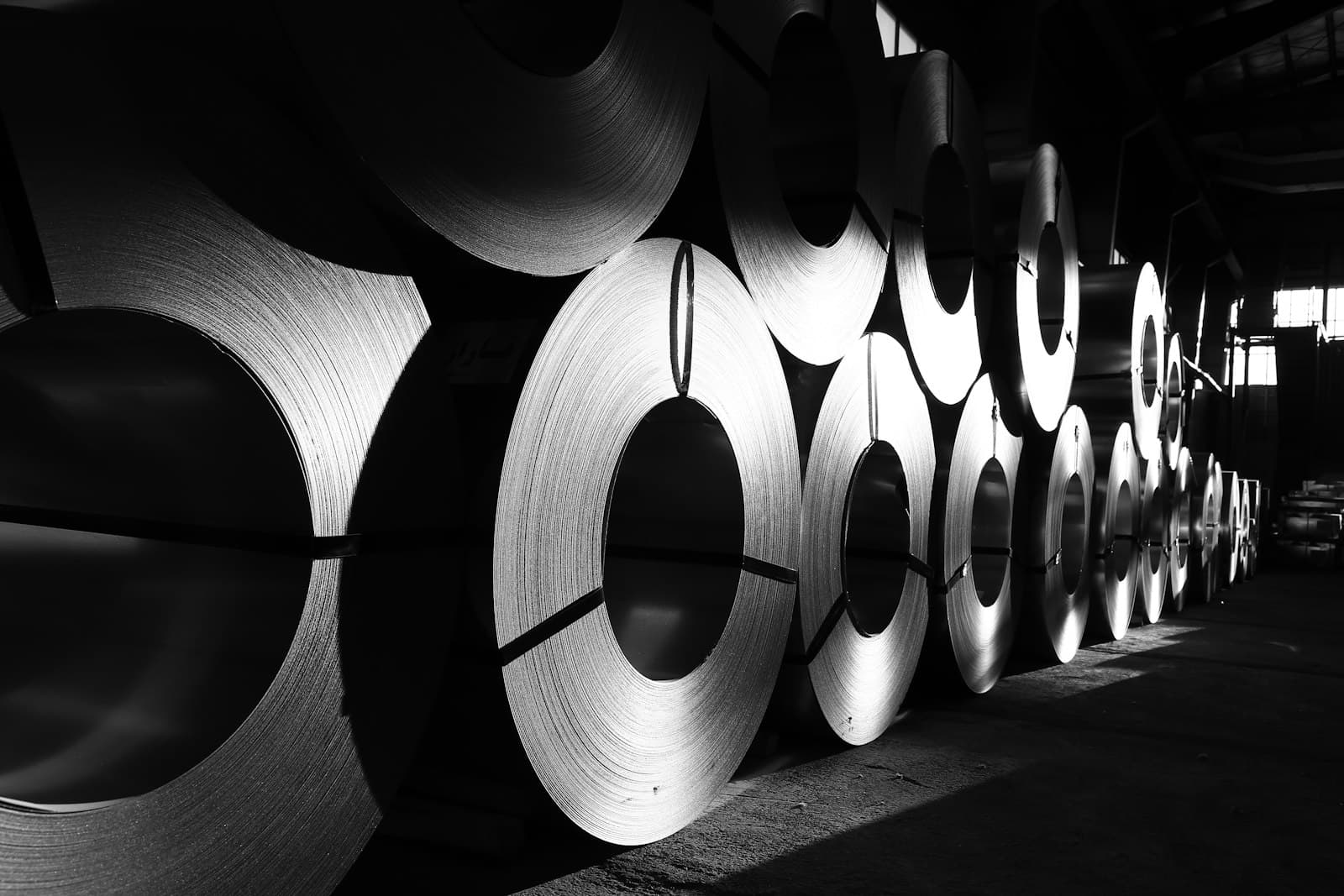
A metal processing plant buys by weight and loses some of that weight at every step. A coil goes onto the slitter and comes off as narrow coils, edge trim and a few metres of head and tail that nobody can sell. Whether the job made money depends on how much of the input became saleable output, and the customer will want to know which heat the material came from and what its test certificate said.
This guide covers what an ERP has to manage in that kind of plant: service centres slitting and cutting coil, plate processors, bar cutters, and plants that form or heat treat. It is written for plant heads, planners, stores in-charges and quality staff.
Quick answer
ERP software for metal processing manufacturers follows the material by weight. It receives coil, plate and bar by heat number with the test certificate values, issues the input lot to each slitting, cutting, forming or treatment batch, records the output lots and scrap by reason against it, shows yield per batch, holds stage QC results, follows vendor processing on challans, and carries the heat number to the delivery note and the order's cost.
Why metal processing plants need a manufacturing ERP
An accounting-led ERP records a purchase of 50 tonnes and a sale of 46. The four tonnes in between become a stock adjustment at month end. For a processor that gap is the business: edge trim, offcuts, setting loss, rejected sheets, and material that is lying on the floor but sits on no record.
The customer side asks for records too. A buyer of slit coil or cut plate wants the heat number and certificate values for what they received, and a complaint about cracking on bending will start from the delivery note. If the heat number is on the receipt but not on the output lots, the answer has to be rebuilt from coil tags and registers. That is why processors usually need ERP and MES on one record: weights and heat numbers are recorded on the floor, and orders, stock and invoices are handled in the office.
Common challenges in metal processing
- Yield found at month end. Input and output weights are reconciled once a month, so a batch that lost too much is found weeks after it ran.
- Heat numbers lost between operations. The mill's heat number is on the coil tag at receipt, but not on the slit coils or sheets cut from it.
- Scrap weighed as one pile. The scrap bay is weighed when the dealer's truck comes, with no split by process, machine, shift or reason.
- Offcuts nobody can find. Usable plate and bar remnants sit in a corner without grade, size or heat number, so fresh material gets cut instead.
- Two units for one item. Orders arrive in tonnes, the floor counts sheets or pieces, and the conversion lives in one person's calculator.
- Vendor processing out of sight. Coils sent for pickling or galvanising come back at a different weight, and nobody checks the difference against the challan.
- Cost per tonne as an average. Material price, yield loss, job work charges and machine time are not attached to the order, so a quoted rate per tonne is never checked.
What should a metal processing ERP system include?
The list follows the material, because in metal processing the material is the record. Each item below should sit on one record, not in separate registers.
Material by heat number and test certificate
Coil, plate and bar are received by lot with the mill's heat number, the grade, the weight and the test certificate: chemistry, and mechanical values such as yield strength, tensile strength and elongation. The certificate values should be held on the lot as data, not as a scanned page in a folder, so they can be checked against the order's specification and carried forward. This is where inventory and lot traceability starts.
BOM or processing recipe
Most processing jobs do not need a deep BOM. A slitting job has one input coil and several output coils; a cut-to-length job turns a coil into sheets of one size. What the system needs is the input item, the output items with their dimensions, the expected yield, and the routing: slit, cut, level, form, treat, pack. Where formed parts are welded or assembled afterwards, a multi-level BOM applies as in any engineering plant.
Production planning by machine and material
Orders are planned on machines: the slitter, the cut-to-length line, the press brake, the furnace. The planner needs to see which coils or plates in stock match the order by grade, thickness and width, and whether the machine has room before the order is released. In FleekERP, production planning puts each order on a machine against its capacity and checks that the material is ready.
Batch tracking with input and output weight
Every batch should record the input lot issued and its weight, the output lots produced with their weights and counts, and the scrap weight by reason. Every output lot keeps the heat number of the input it was cut from. This one record is what lets yield be read per batch instead of reconciled once a month.
Inventory: raw material, WIP and finished goods
Stock is held by lot, weight and location: mother coils and plates in the raw material bay, slit coils or blanks waiting for the next operation, material at a vendor, and finished lots waiting for dispatch. Usable offcuts should be stock too, with grade, size and heat number, or they will not be used. Most items need two units, weight and pieces, with the conversion held on the item.
Shop-floor execution
Operators record output weight or count, scrap with a reason and downtime with a cause at the machine, during the shift. Without this, the yield figure is assembled later from weighbridge slips and registers, and nobody can say which shift lost the material. In FleekERP these entries are made on shop floor apps on Android phones.
Stage QC and rework
Incoming checks against the certificate, then checks at each operation: slit width and burr height, sheet length and squareness, flatness after levelling, bend angle on formed parts, hardness after treatment. When a check fails, the batch stays on hold until quality decides between rework, use as is, or reject. Rework such as re-levelling or re-trimming should be an operation on the same order, so its weight loss and its re-inspection stay on the record.
Subcontracted processing
Pickling, galvanising, heat treatment and painting often go to vendors. The vendor step should sit on the routing in sequence, with material going out on a challan and coming back against it, and any shortfall shown on the order rather than found at stock-taking.
Dispatch with the heat number on the delivery note
Dispatch picks finished lots against the order by weight or count. The delivery note should carry the heat number of each lot, and the certificate the customer receives should come from the values recorded on the lot, not be retyped from the mill's paper.
Batch and order costing
Material at the cost of the lot actually issued, yield loss, conversion time and vendor charges, added up on the order. With that, the plant can compare its real cost per tonne with the rate it quoted, order by order.
How work flows through a metal processing plant
A plate processor and a coil service centre run different machines, but the sequence of records is close. The step-by-step guide to the metal processing workflow follows one coil through each stage in more depth.
- 1Sales orderGrade, thickness, size, tolerance, quantity in tonnes or pieces, and delivery date.
- 2Material checkCoils or plates in stock are matched by grade and size. A shortfall goes to purchase.
- 3ReceiptMaterial arrives with heat number, weight and test certificate, and is checked before acceptance.
- 4Production orderThe batch is planned on a machine and the input lot is issued by weight.
- 5ProcessingSlitting, cutting, forming or treating. Output lots and scrap by reason are recorded against the input.
- 6Stage QCWidth, burr, flatness, dimensions or hardness checked at the operation.
- 7Vendor processingPickling, galvanising or heat treatment out on a challan and back against it.
- 8Final QCThe finished lot is inspected and released or held.
- 9DispatchLots picked against the order. The heat number goes on the delivery note and the invoice goes to the accounting system.
What is the difference between ERP and MES in metal processing?
ERP plans and records the business side: orders, stock by weight, purchasing, dispatch and cost. MES records what happened at the machine: which coil ran, what came off it, how much was trimmed, what the checks measured and why the line stopped. In processing, yield sits exactly between the two. The input weight is a stores transaction; the output and scrap weights are floor entries.
Some plants run an ERP and add floor recording later. Others choose one system for both, so yield does not depend on two databases agreeing. Either way, the test is whether an output weight entered at the slitter updates stock, yield and cost without anyone keying it in again.
How FleekERP supports metal processors
FleekERP is a manufacturing ERP and MES built around work orders, operations, lots and inspections. For metal processors, coil, plate and bar are received by lot with the heat number, and test certificate values are recorded as characteristics on the lot. The input lot is issued to each batch, output lots and offcuts are recorded against it, and the heat number stays on every output lot through to the delivery note.
Issued weight is set against produced weight and scrap weight on every batch, and scrap is split by reason, such as offcut, rejection or setting loss, so yield is read per batch. Items carry both weight and pieces, with the conversion on the item. Stage checks are recorded at the operation, a failed check holds the batch, and rework is an operation on the same work order. Vendor processing runs on a challan. Accounting stays in Tally or Zoho, which FleekERP syncs with.
Limits worth knowing before you shortlist it: the apps need a data or Wi-Fi connection, there is no barcode or QR scanning, so coil tags are not scanned, and weights are entered by people: FleekERP does not read scales or weighbridges, and machine data is on the roadmap rather than available. Final inspection data exports per lot in a standard format; a customer's own certificate layout is quoted as a custom report. FleekERP at a glance lists the limits in full.
Implementation considerations
- Start with the machine that runs the most orders, usually the slitter or the cut-to-length line.
- Load opening stock by lot with heat number and weight, including the offcuts you actually intend to use.
- Agree a short list of scrap reasons before go-live, not after the first month.
- Settle units and conversions on each item, from thickness, width and density.
- Take stage checks from the inspection sheets the floor already uses.
The guide to implementing ERP in a metal processing plant sets out the stages and the data to prepare.
Business benefits
What a processor gains follows from recording weights and heat numbers when the work happens:
- Yield per batch, seen on the day the batch ran.
- Heat number and certificate values on the delivery note without retyping.
- Scrap split by reason, machine and shift, so a recurring loss has a name.
- Material at vendors visible by weight on the order.
- Cost per order that includes yield loss and job work charges.
The size of the change follows from the starting point. A plant that already weighs every batch in a register will gain mostly time; one that reconciles once a month will see losses it did not know it had.
Frequently asked questions
Why does a metal processor need MES as well as ERP?
Because yield sits between the two. The input weight is a stores entry, but the output weight, scrap by reason and stage checks happen at the machine. When both are recorded on one record, yield is read per batch instead of reconciled at month end.
What should be recorded on each processing batch?
The input lot and its issued weight, the output lots with their weights and counts, scrap weight split by reason, the stage checks and their results, and the heat number carried from the input to every output lot.
Should test certificate values be kept as data or as scanned copies?
As data on the lot. Values held as characteristics can be checked against the order's specification and carried to the output lots and the delivery note. A scanned page in a folder cannot be checked or carried forward.
Can FleekERP produce our customer's test certificate format?
Final inspection data exports per lot in a standard format. A certificate in a customer's own layout is quoted as a custom report.