
Automotive & Components · ERP guide
ERP software for automotive component manufacturers: what the system has to hold
A component supplier runs on OEM schedules, lot traceability and in-process checks. This is what an ERP has to manage in that kind of plant, stage by stage, and where an accounting-led ERP usually leaves gaps.
By Nexfloe · · 8 min read
- Industry:
- Automotive & Components
- Article type:
- ERP guide
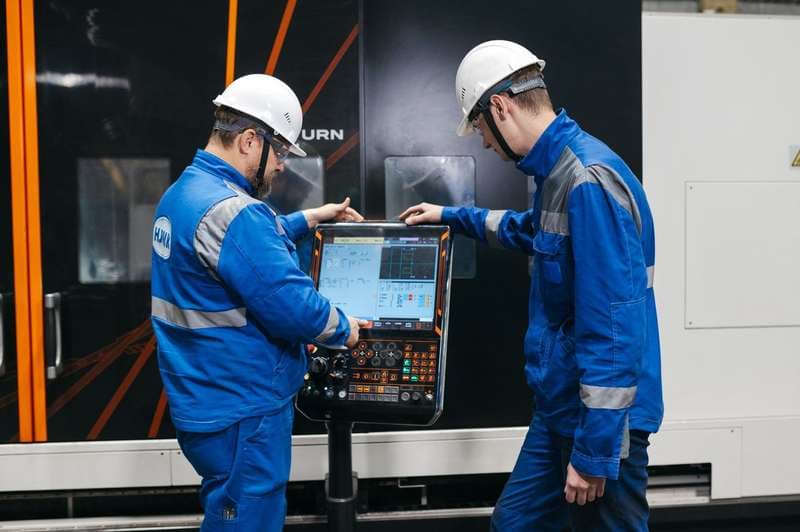
An automotive component plant does not run on its own forecast. It runs on the customer's schedule, which changes most weeks, and on records the customer's quality team can ask to see at any time: which steel lot went into which batch, who machined it, what the bore measured at operation 30. An ERP for this kind of plant is judged on whether it can answer those questions without someone spending a day in the files.
This guide covers what that system has to manage, how work flows through a typical component plant, and what to look for before choosing one. It is written for plant heads, planners and quality managers at suppliers making machined, pressed, cast or assembled parts.
Quick answer
ERP software for automotive component manufacturers connects OEM schedules to production and quality records. It turns schedule lines into work orders, holds multi-level BOMs with their revisions, receives steel, castings and bought-out parts by supplier lot, records in-process checks at the operation, tracks plating and heat treatment at vendors, and links every dispatched lot back to its material, operators and inspections.
Why automotive component plants need a manufacturing ERP
Most ERP systems start from accounting: a sales order, a purchase order, a stock ledger and an invoice. That covers the office. It does not cover what an OEM supplier is measured on, which happens on the floor: the quantity made against this week's schedule, the inspection results on each batch, and the trail from a shipped part back to its raw material.
In a component plant those floor records are not optional. A customer complaint arrives with a part number and a date, and the supplier is expected to say which batches are affected and why. If production sits in registers and quality data in separate sheets, that answer takes days. This is why automotive suppliers usually need ERP and MES (manufacturing execution) working on one record, rather than an accounting-led ERP with the floor left out.
Common challenges in automotive component manufacturing
- Schedules that move every week. OEM releases revise quantities and dates, and the floor keeps working to the old plan until someone re-does it by hand.
- Traceability spread across registers. Supplier lot, heat number, machine, operator and inspection result are written in different places, so a trace means stitching them together.
- Defects found at the end. When dimensional checks happen only at final inspection, a bad setting at an early operation can run for a whole shift before anyone sees it.
- Plating and heat treatment out of sight. Parts leave on a challan and come back without a clear count, so short returns are found late.
- Rejections without a cause. The plant knows how many parts were rejected this month, but not at which operation or why, so the same problem returns.
- No real cost per part. Scrap, rework and vendor charges are not attached to the order, so the margin on a part number is an estimate.
What should an automotive ERP system include?
The list below follows the records an OEM supplier is actually asked for. Each should be handled on one record, not across separate tools.
Production planning against customer schedules
Customer schedule lines become sales orders and work orders by part and week. When the customer revises the schedule, the open orders change with it. Work orders are placed on work centres against their capacity, so an overloaded press or machining cell shows before the order is released. Production planning in FleekERP works this way.
Multi-level BOMs with revision control
A bracket assembly may have a pressed part, a machined bush, a weld nut and fasteners, each with its own routing. The BOM has to be multi-level, and the revision used for an order has to be fixed when the order is released, so a drawing change next week does not alter the trace or cost of parts already made.
Material by supplier lot and heat number
Steel, castings, forgings and bought-out parts are received against the supplier's lot or heat number, inspected on receipt, and issued to the work order by lot. This is the first link in the genealogy. See how inventory and lot traceability records it.
Inventory: raw material, WIP and finished goods
Stock has to be known by lot and location at three points: raw material in stores, work in progress at each operation or at a vendor, and finished goods waiting for dispatch. Material should be allocated to released orders, so two orders cannot count on the same steel, and consumption should be recorded as operations complete rather than adjusted at month end. Month-end stock that never matches the books usually means consumption is being estimated.
Shop-floor execution
This is the MES side of the system. Operators record good counts, scrap with a reason and downtime with a cause against the operation they are running, and supervisors see output against the plan during the shift rather than the next morning. Without it, the ERP knows what was planned but not what happened, and stock, cost and the trace all rest on figures typed in later. In FleekERP these entries are made on shop floor apps at the station.
Quality: inspection at the operation
First-off approval at setup, in-process dimensional checks with nominal and tolerance, and final inspection on a sample plan. Each measured value is recorded with the batch, the operator and the time, and a failed check holds the batch until quality decides between rework, use as is, or reject. Quality control in FleekERP records checks at the operation in this way.
Subcontracted operations
Plating, heat treatment, painting and some machining are often done by vendors. The vendor step should sit on the routing in sequence, with the challan out, the return in and any short return flagged on the order.
Dispatch and lot genealogy
One search on a finished lot should return the supplier lots, the operations, the operators and the inspections inside it. Dispatch picks by lot against the schedule, so the delivery note carries the trace forward.
Cost per part and per order
Material by lot, scrap, rework, machine time and vendor charges, added up on the order. Without this, price discussions with the customer rely on a costing sheet made at quotation time.
How work flows through a component plant
The detail differs between a machining shop, a press shop and an assembly line, but most component plants follow this sequence. The step-by-step guide to the automotive manufacturing process covers each stage in more depth.
- 1Customer scheduleOEM schedule lines become sales orders by part and delivery week.
- 2BOM and routingThe released revision is fixed on each work order.
- 3Material planningRequirements are checked against stock by lot and open purchase orders. A shortage names the order it will stop.
- 4Procurement and incoming inspectionSupplier lots are received, sampled and accepted or held.
- 5Production orderWork orders are planned on work centres by capacity, and material is issued by lot.
- 6Shop floorOperators log counts, scrap and downtime against the operation. QC records first-off and in-process checks.
- 7Vendor operationsPlating or heat treatment goes out on a challan and comes back against it.
- 8Final inspectionThe finished lot is inspected on its sample plan and released or held.
- 9DispatchLots are picked against the schedule and shipped with a delivery note. The invoice goes to the accounting system.
What is the difference between ERP and MES for a component supplier?
ERP plans and records the business side: orders, stock, purchasing, dispatch and cost. MES records what happens on the floor as it happens: which operation ran, how many parts were good, what the inspection measured, why a machine stopped. For an OEM supplier the two are hard to separate, because the customer asks for floor records (inspection values, lot genealogy) against business documents (the schedule and the delivery note).
Some plants run an ERP and add an MES later. Others choose one system that does both, so a lot trace or an order's cost does not depend on two databases agreeing. Either way, the test is whether a quality record entered at the machine is linked to the order and the shipment without anyone typing it in again.
How FleekERP supports automotive component manufacturers
FleekERP is a manufacturing ERP and MES built around work orders, operations, lots and inspections. For automotive component makers, schedule lines become work orders by part and week, supplier lots are received with incoming inspection, and operators and QC record counts and measured values at the operation on Android phones. Plating and heat treatment run as vendor operations on the routing, followed through the challan.
Every finished lot links back to its supplier lots, operations, operators and inspections, so a customer trace is one search. Rejections are reported by operation, cause and shift. Accounting stays in Tally or Zoho, which FleekERP syncs with. FleekERP keeps the records an IATF 16949 audit usually asks to see, but it is not itself IATF certified and does not certify a plant.
There are limits worth knowing before you shortlist it: the apps need a data or Wi-Fi connection, there is no barcode or QR scanning today, and machine data from PLCs or sensors is on the roadmap rather than available. FleekERP at a glance lists these in full.
Implementation considerations
- Start with the part numbers that cause the most customer queries, not the whole catalogue.
- Clean up BOM and routing revisions before go-live. A wrong revision in the system is worse than none.
- Load opening stock by lot, so the first traces are complete.
- Take inspection characteristics from the existing control plan rather than writing new ones.
- Train operators and QC at their stations, on real work orders, one line at a time.
The guide to implementing ERP in an automotive plant goes through the stages and the data to prepare.
Business benefits
What an automotive supplier gains follows from having the records in one place, made when the work happens:
- Customer trace requests answered from one search, instead of from registers and spreadsheets.
- Schedule changes reflected in the plan the same day.
- Defects caught at the operation that caused them, with the cause recorded.
- Short returns from plating and heat treatment vendors flagged on the order.
- Scrap, rework and vendor charges visible in the cost of each order.
How large each gain is depends on where the plant starts. A plant already running a capable ERP will see less change than one running on registers and WhatsApp.
Frequently asked questions
Does an automotive component supplier need MES as well as ERP?
Usually, yes. ERP handles orders, stock, purchasing, dispatch and cost. MES records what happens on the floor: counts, scrap, downtime and inspection values at the operation. OEM customers ask for floor records against business documents, so the two need to share one record, either as one system or two that are tightly linked.
What records do OEM customers usually ask a component supplier for?
Most often a lot trace from the shipped part back to the supplier lot and heat number, the inspection results on a batch with who recorded them, how a rejected batch was dispositioned, and evidence of what was made against the schedule. An automotive ERP should produce each of these from one record.
Can an ERP track heat numbers and supplier lots for automotive parts?
A manufacturing ERP should. Steel, castings and bought-out parts are received against the supplier lot or heat number, inspected on receipt and issued to the work order by lot. That link carries through every operation to the finished lot and the delivery note.
Is FleekERP IATF 16949 certified?
No. FleekERP keeps the records an IATF 16949 audit usually asks to see: lot traceability from supplier to shipment, in-process inspection results with the operator and time, batch holds with their disposition, and rejections by operation and cause. Certification belongs to the plant's quality management system, not to software.