
Electronics & PCB · ERP guide
ERP software for electronics and PCB manufacturers: what the system has to manage
PCB assembly and wiring harness plants run on long BOMs, frequent revisions, component lots and test results. This is what an ERP has to manage in that kind of plant, and where an accounting-led system usually stops short.
By Nexfloe · · 10 min read
- Industry:
- Electronics & PCB
- Article type:
- ERP guide
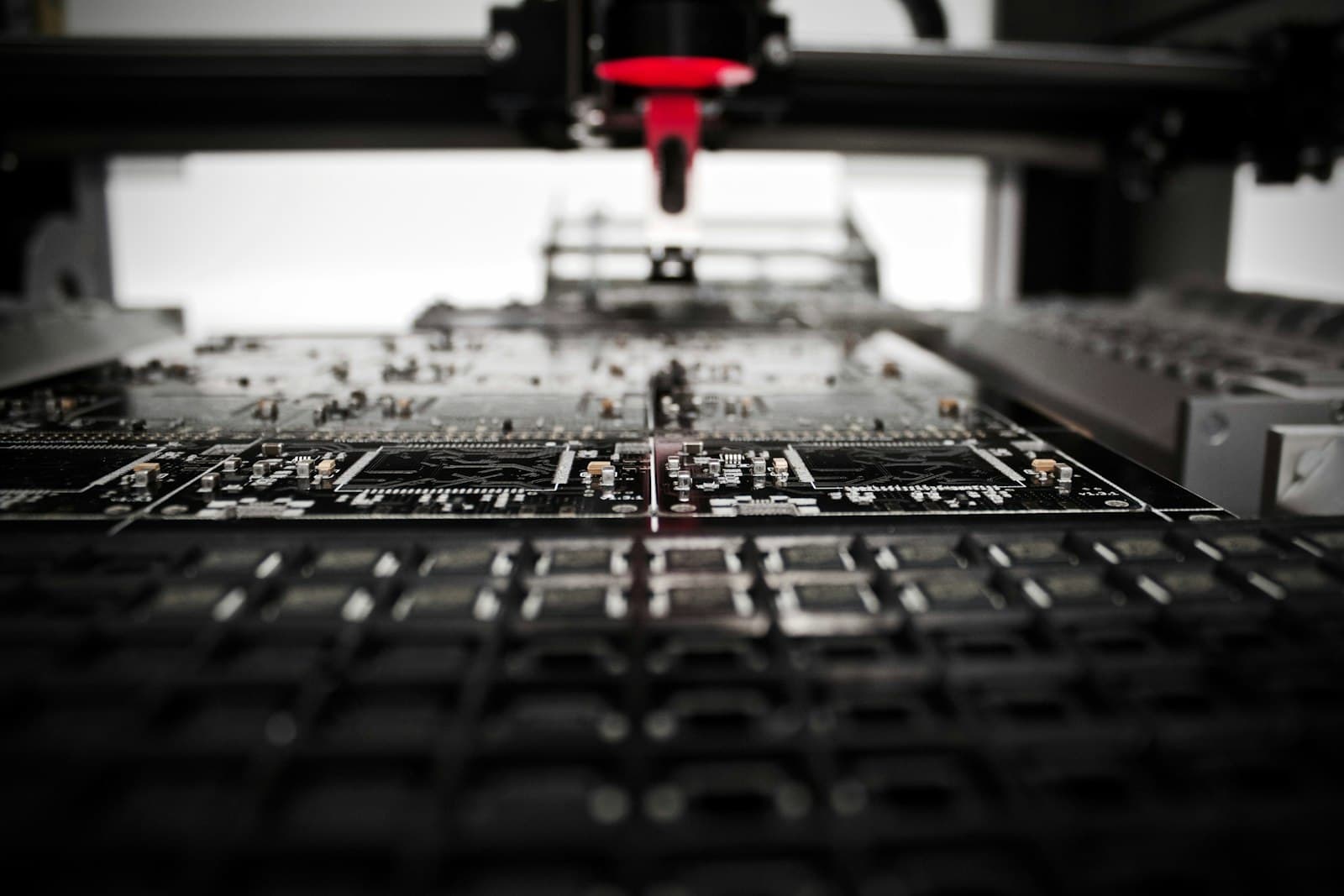
An electronics plant is judged on records most ERPs never see. When a field failure comes back from an OEM, the questions are specific: which reel of capacitors went into that batch of boards, which BOM revision they were built to, who reworked the two that failed functional test, and what else was built from the same component lot. A wiring harness maker gets the same questions about wire lots, terminal lots and crimp checks.
This guide covers what an ERP has to manage in a PCB assembly or wiring harness plant, how work moves through one, and where ERP and MES divide the job. It is written for plant heads, production planners, stores in-charges and quality engineers.
Quick answer
An ERP for electronics and PCB manufacturers has to hold long multi-level BOMs with approved alternates and ECN revisions, check every component line before kitting, receive reels, wire and terminals by supplier lot, record SMT, through-hole, crimping, assembly and test at the operation, keep rework and re-test on the order, and link each finished lot back to its component lots, operators and test results.
Why electronics and harness plants need a manufacturing ERP
An accounting-led ERP holds the purchase order for a reel of resistors and the invoice for the finished board. It usually does not hold what happens in between: which lot was issued to which job, how many boards passed in-circuit test, which units went to the rework bench and whether they were tested again. In electronics, those in-between records are what the customer audits.
The BOM is also bigger than in most assembly work. One board can carry a few hundred lines, many with approved alternates, and a single missing part holds the whole kit. Long BOMs that change often, and a trace that has to reach the component lot, are why most electronics and harness plants need ERP and MES (manufacturing execution) working on one record.
Common challenges in electronics and wiring harness manufacturing
- One short part stops the kit. A board with 180 lines cannot be built with 179, and the shortage is often found while the kit is being pulled.
- Revisions arrive mid-order. An ECN swaps a part or changes a footprint, and nobody is sure which boards on the floor were built to which revision.
- Component lots lose their identity at the line. Reels move between feeders and jobs, and once parts leave stores the link between lot and finished batch rests on memory.
- Test results sit apart from the product. In-circuit, functional and continuity results stay on the tester, on paper or in a sheet, not with the batch or the unit.
- Rework is not written down. Boards are touched up at the rework bench and passed, but the fault, the fix and the re-test never reach the order.
- Crimp checks are done and then lost. Crimp height is measured at setup, but the reading is not kept with the batch, so a terminal failure in the field cannot be traced to the setup that made it.
- Cost per board is a guess. Placement attrition, scrap, rework time and job work charges do not reach the order.
What should an electronics manufacturing ERP system include?
The list follows the records a PCB assembler or harness maker is actually asked for. Each should sit on one record, not across separate tools.
BOM management with ECN and revision control
Electronics BOMs are long and multi-level: a board inside a sub-assembly inside a box build, or a harness supplied with a product. Each engineering change note should produce a new revision, with approved alternates held on the BOM line. The revision used for a work order should be fixed when the order is released, so next week's ECN does not rewrite the record of boards already built. The guide to multi-level BOM management covers the structure.
Production planning and kitting
Orders are planned on the SMT line, the through-hole and soldering stations, the test benches or the harness boards, against their capacity. Before release, every BOM line should be checked against stock by lot, allocations to other orders and open purchase orders, and the short line named. Kitting then pulls against an order that can actually run. Production planning in FleekERP marks an order short, with the item that is missing, before it is released.
Component traceability by lot
Reels, trays, tubes, wire spools and terminal reels are received against the supplier's lot or date code, inspected on receipt and issued to the work order by lot. That issue is the first link in the genealogy. Moisture-sensitive parts add a control in many plants: when the sealed bag was opened, the remaining floor life and any bake, under the plant's MSL procedure. Wherever that log is kept, it should refer to the same lot. See how inventory and lot traceability records receipt and issue.
Serial numbers and unit-level records
Some customers accept a lot trace. Others want each board or harness identified by serial number, with its own test history. Decide which products need which before choosing a system, and ask how serials are created, linked to the component lots and carried through rework. A unit that goes to the rework bench should come back with its identity and history intact.
Inventory: components, WIP and finished goods
Stock has to be known by lot at three points: components in stores, work in progress at each operation, and finished boards or harnesses waiting for dispatch. Consumption should follow completed operations, with attrition at the placement machine recorded rather than written off at month end. Part reels coming back from the line are where component stock most often drifts away from the system.
Shop-floor execution
This is the MES side. Operators record good counts, rejects with a reason and downtime with a cause at the SMT line, the wave or selective solder station, the crimping machine or the harness board. Supervisors see output against plan during the shift, not the next morning. In FleekERP these entries are made on shop floor apps on Android phones at the station.
Quality: inspection and test at the operation
Incoming inspection on component lots, first-article checks after a changeover, crimp height at the crimping operation, AOI, in-circuit and functional test on boards, and continuity test on harnesses. Each result should sit on the batch with the operator and the time, and a failure should hold the batch until quality decides between rework, use as is, or reject. Quality control in FleekERP records checks on the operation in this way.
Rework and re-test
Rework is routine in electronics: a tombstoned resistor, a solder bridge, a terminal on the wrong cavity. It should be an operation on the same order, carrying the fault, with the re-test recorded against the same batch or unit. Rework done off the record leaves a gap in the trace and in the cost.
Subcontracted operations
Many plants send work out: SMT to an assembly house when their own line is full, conformal coating, potting, or an overmoulded part for a harness. Each vendor step should sit on the routing in sequence, with the challan out, the return in and any short return flagged on the order.
Dispatch and genealogy
Dispatch picks finished lots against the customer order, so the delivery note carries the trace forward. One search on a finished lot should return the component lots, the BOM revision, the operations, the operators and the test results inside it.
Cost per board and per order
Components at the lot's cost, attrition, scrap, rework and test time, and job work charges, added up on the order. On a board with hundreds of parts, small losses per line add up, and the costing sheet made at quotation will not show them.
How work flows through an electronics or harness plant
A contract assembler, a product company and a harness plant each do this differently, but the sequence of records is close. The walk-through of the electronics manufacturing process follows one board and its harness through each stage.
- 1Customer orderPart number, revision, quantity and delivery date.
- 2BOM revisionThe released revision and its alternates are fixed on the work order.
- 3Material planningEvery BOM line is checked against stock by lot and open purchase orders.
- 4Procurement and incoming inspectionReels, wire and terminals are received by supplier lot and accepted or held.
- 5Kitting and production orderThe order is planned on its work centres and components are issued by lot.
- 6SMT, THT or cut and crimpCounts, rejects and downtime per operation, with crimp height at setup.
- 7Assembly and testTest results per unit or per batch. A failure holds the batch.
- 8Final QCThe finished lot is inspected and released, reworked or rejected.
- 9DispatchLots are picked against the order and shipped. The invoice then passes to the accounts package.
What is the difference between ERP and MES in electronics manufacturing?
ERP plans and records the business side: orders, BOMs, purchasing, stock, dispatch and cost. MES records what happens on the floor as it happens: which job ran on the SMT line, how many boards passed test, which crimp check failed, why the line stopped. An electronics trace needs both, because it joins a business document (the delivery note) to floor records (component issue, test results, rework).
Some plants run an ERP and add an MES later, and then maintain the link between them. Others choose one system that does both. Either way, the test is whether a test result entered at the bench reaches the order and the shipment without anyone typing it in again.
How FleekERP supports electronics and wiring harness manufacturers
FleekERP is a manufacturing ERP and MES built around work orders, operations, lots and inspections. For electronics and wiring harness makers, wire, terminals, connectors and PCBs are received by supplier lot with incoming inspection and issued to the work order, and the link to the finished lots builds as production happens. SMT, through-hole, cutting, crimping, assembly and test are defined as operations on your own routing. Crimp height checks are recorded at the crimping operation, and at test, QC records pass or fail, measured values and a photo per unit or per batch. A failed test holds the batch.
Units are tracked by lot today, with test results per unit within the lot where the plan needs them. Serial-level genealogy is configured per product during implementation, so settle early which products need it. SMX Enterprises, a wiring harness and connectivity maker in Bengaluru, used to keep traceability in Excel; it now pulls a full lot trace for an OEM audit in under three minutes.
The limits matter in this sector. AOI and test equipment results are entered on the test operation by QC or the operator; direct machine data is on the roadmap. There is no barcode or QR scanning today, which is a real gap for a plant used to scanning reel labels. The apps need a data or Wi-Fi connection, and the interface is in English, with Tamil and Hindi in development. Accounting stays in Tally or Zoho, which FleekERP syncs with. FleekERP keeps the kind of inspection and trace records an ISO 9001 or customer audit asks for, but certification belongs to the plant. FleekERP at a glance lists the limits in full.
Implementation considerations
- Start with the product families that draw the most OEM trace requests, not the whole catalogue.
- Clean up BOM revisions and alternates first, and retire revisions that are no longer built.
- Load opening component stock by lot, including part reels sitting on the line.
- List which products need serial-level records before configuration starts.
- Take test steps and crimp height limits from the existing test specs and setup sheets.
- Train operators, testers and QC at their stations, on real orders, one line at a time.
The guide to implementing ERP in an electronics plant goes through the stages and the data to prepare.
Business benefits
What an electronics or harness plant gains follows from having the records in one place, made when the work is done:
- OEM trace requests answered from one search instead of from sheets and registers.
- Shortages named before kitting, rather than found with the line waiting.
- Boards built to a known BOM revision, even when ECNs arrive mid-order.
- Test failures, rework and re-tests on the record, with the cause attached.
- Attrition, scrap, rework and job work visible in the cost of each order.
How much changes depends on where the plant starts. A plant already running a capable system with scanning and tester integration will see less difference than one running on Excel and WhatsApp.
Frequently asked questions
What should an ERP for PCB assembly track?
Long multi-level BOMs with approved alternates and ECN revisions, component lots from receipt to issue, counts and rejects at SMT, through-hole and soldering, AOI and test results with the operator and time, rework and re-test on the same order, and the link from each finished lot back to its component lots.
How should an electronics ERP handle ECNs and BOM revisions?
Each engineering change produces a new BOM revision, with approved alternates on the BOM line. The revision used for a work order is fixed when the order is released, so a later ECN does not change the record or cost of boards already built.
Can FleekERP give each board or harness its own serial record?
Units are tracked by lot today, with test results per unit within the lot where the plan needs them. Serial-level genealogy is configured per product during implementation, so the products that need it should be listed before configuration starts.
Can FleekERP read results from AOI machines or testers directly?
Not today. AOI and test results are entered on the test operation by QC or the operator, with pass or fail, measured values and a photo. Direct machine data is on the roadmap.